Painting 3D Printed Parts with Acrylic Marker Pens – A Practical Guide


Introduction
Why Use Acrylic Markers for 3D Prints?
Acrylic markers are popular because they simplify the painting process. Unlike brushes or spray paints, they allow precise application without additional tools or setup.
They are particularly useful for:
- Small parts and fine details
- Multi-colour designs
- Touch-ups and corrections
- Quick finishing without complex preparation
For users working with PLA, PETG, or resin prints, acrylic markers provide a convenient and controlled way to enhance visual quality.
Surface Preparation
Before painting, proper surface preparation is essential. Even though acrylic markers are easy to use, skipping preparation can lead to poor adhesion or uneven results.
- Cleaning the Surface: Remove dust, grease, or residue from the print. Use isopropyl alcohol or a clean cloth.
- Sanding: Light sanding helps smooth layer lines and improves paint adhesion. Start with medium grit (e.g., 200–400) and finish with finer grit (600–1000).
- Priming (Optional but Recommended): Applying a primer creates a uniform surface and improves colour consistency. This is especially useful for darker filaments or rough prints.
How to Paint with Acrylic Markers
- Step 1: Shake and Activate the Marker: Shake the pen well and press the tip until the paint flows evenly.
- Step 2: Apply in Thin Layers: Use light strokes and avoid overloading the surface. Multiple thin layers produce better results than one thick coat.
- Step 3: Allow Drying Time: Let each layer dry before applying another. Acrylic paint dries quickly, but rushing can cause smudging.
- Step 4: Add Details: Acrylic markers are ideal for adding highlights, edges, and fine features.
- Step 5: Seal the Surface (Optional): For durability, apply a clear coat or varnish after painting.
Best Materials for This Method
Acrylic markers work well on:
- PLA → Easy to paint, good adhesion
- Resin prints → Smooth surface, excellent results
- ABS → Requires proper cleaning and possibly priming
- PETG → Slightly harder to paint, sanding recommended
Applications
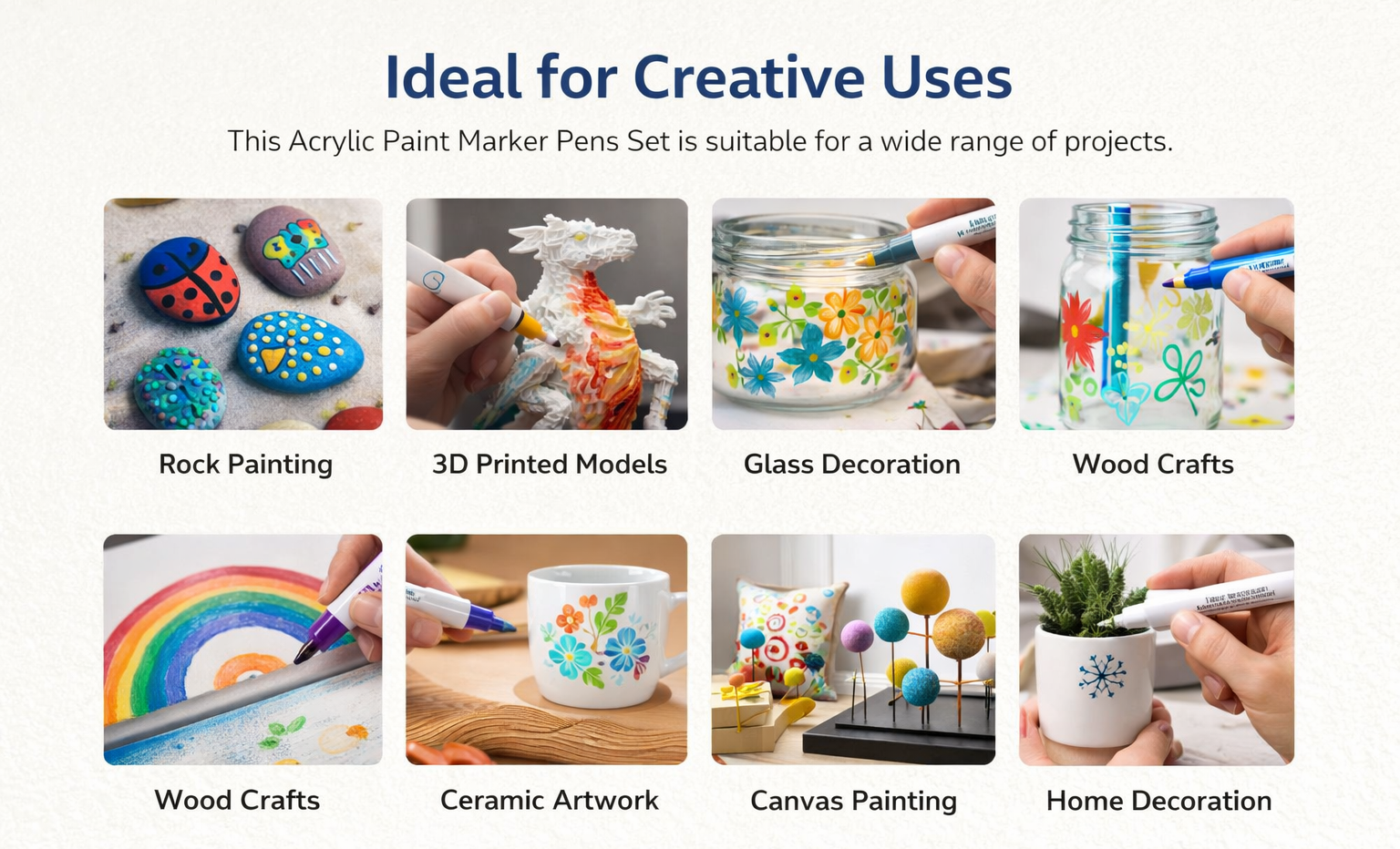
Painting 3D printed parts with acrylic markers is suitable for:
- Decorative models and figurines
- Prototypes with visual presentation needs
- Customised products and gifts
- Educational models
- Small batch handmade items
Advantages of Acrylic Markers
- Easy to Use: No need for brushes, mixing, or airbrush systems.
- High Control: Perfect for detailed work and small areas.
- Minimal Setup: Quick to start and clean up compared to traditional painting methods.
- Fast Drying: Reduces waiting time between layers.
- Portable: Can be used anywhere without special equipment.
Limitations and Drawbacks
- Not Ideal for Large Surfaces: Covering large areas can be time-consuming and may result in uneven finish.
- Limited Blending: Compared to spray or brush painting, blending colours is more difficult.
- Tip Wear: Frequent use on rough surfaces can wear down the marker tip.
- Surface Dependence: Results vary depending on the print quality and material.
- Durability: Without sealing, the paint may wear off with heavy handling.
Tips for Better Results
- Use light colours over primer for better visibility
- Work in layers rather than applying heavy paint
- Test on a spare print before final application
- Use fine-tip markers for detailed work
- Seal the final result for protection
Acrylic Markers vs Other Methods
| Method | Ease of Use | Detail | Coverage | Equipment |
|---|---|---|---|---|
| Acrylic Markers | High | High | Medium | None |
| Spray Paint | Medium | Low | High | Required |
| Brush Painting | Medium | Medium | Medium | Required |
| Airbrush | Low | High | High | Advanced |
Acrylic markers are best for simplicity and precision, while other methods are better for large-scale coverage.
Conclusion
Using acrylic paint marker pens is one of the most practical ways to paint 3D printed parts. It offers a balance between control, convenience, and quality, making it suitable for a wide range of users. While it may not replace professional painting methods for large or highly detailed projects, it is an excellent solution for everyday use, small models, and quick finishing tasks. With proper preparation and technique, acrylic markers can significantly improve the appearance of your 3D prints.